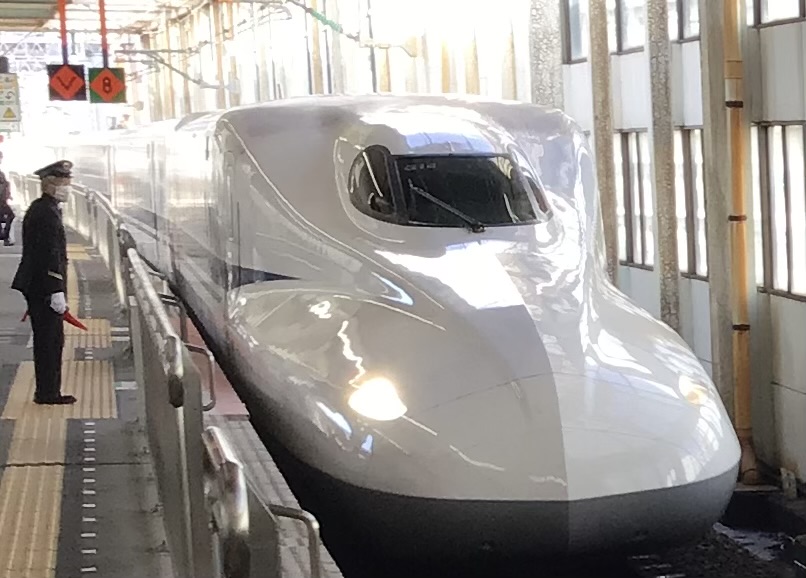
I’m nearly a month into my stay in Tokyo, and I think I’ve been here long enough to start sharing what feels different from the Japan I last lived in some thirty years ago. Some changes are easy to spot—especially in language and everyday life—while others are written into the economy. In this post, I’ll focus on the economic shifts that have stood out to me. I’ll save the things that haven’t changed for another time.


From boom to long slowdown
The most striking change is economic. I first came to Japan during the bubble years, when the country was widely seen as the “rising sun.” Wealth seemed to be everywhere; people were giddy with possibility, and it felt as though money couldn’t be spent quickly enough to keep pace with the growth.
Then the mood changed. Japan’s asset bubble burst in the early 1990s, and the country entered a prolonged period of stagnation. I left Japan in 1995, just as the exuberance I remembered was giving way to a very different atmosphere. For me, it felt as if the party had ended almost overnight.
Japan’s remarkable postwar expansion had already slowed sharply after the 1973 oil crisis. Later, loose monetary policy and excessive lending helped fuel a massive speculative bubble, commonly dated from 1986 to 1995. Real estate and stock prices soared to unsustainable heights, creating immense paper wealth. When the bubble burst, that wealth evaporated—and Japan entered what became known as the “Lost Decade,” a period of stagnation and deflation that extended well beyond 1995.
The contrast with the rapid expansion of the 1960s through the 1980s has been stark. For years, GDP growth was low, often seesawing between recession and modest recovery. Persistent deflation—or very low inflation—also weighed on confidence: if consumers expected prices to fall, they had reason to postpone purchases; if businesses anticipated weak demand, they had less incentive to invest.
At the same time, Japan’s population aged and its workforce began to shrink, putting pressure on both economic growth and social security systems. Some companies also became “zombies”: firms kept afloat by low-interest loans despite being financially insolvent. Their survival could slow the movement of capital and talent toward more productive businesses.


A smaller share of a bigger world
Japan’s share of world nominal GDP fell from about 17.8% in 1995 to about 3.6% by 2025. That is a dramatic change in Japan’s relative weight in the global economy—but it doesn’t mean Japan has ceased to be prosperous or influential. It remains the world’s fourth-largest economy by nominal GDP, with a high standard of living, deep technological expertise, and an important place in global supply chains.
The figures capture a shift in perspective: Japan is still a major economic power, but it no longer occupies the same commanding position it did during the boom years.
The yen, then and now
During my working years in Japan, my salary seemed high compared with what my Canadian counterparts earned, largely because of exchange rates. The early 1990s were marked by a historically strong yen, a period often called en-daka—literally, “high yen.” A stronger yen made overseas goods and travel more affordable for Japanese residents, while also making Japanese earnings look impressive when converted into Canadian dollars.
For a brief period, 1 Canadian dollar could be exchanged for about 60 Japanese yen. Today, the rate is closer to 120 yen to the Canadian dollar. That change is more than a number on a currency chart: it helps explain why international travel can feel much more expensive for Japanese households now than it did during the strong-yen years.

Similar travel numbers, different story
At first glance, outbound travel figures look surprisingly similar: 15.3 million trips in 1995 and 14.7 million in 2025. But those totals conceal a very different reality.
Japan’s population has aged and declined since the mid-1990s. So, even with a similar number of trips, the share of the population travelling abroad—and who is doing the travelling—may look quite different. A strong yen once made overseas holidays more accessible to many workers. Today, a weaker yen and a changed economic climate can make international travel a bigger stretch for household budgets.
The style of travel has shifted, too. The 1995 picture was strongly associated with organized group tours and short, tightly planned sightseeing trips. Today’s travel market is more varied, with independent and solo travel, as well as short-haul regional destinations, playing a larger role. The numbers may be close; the experience behind them is not.
Why passports remain uncommon
A relatively low rate of passport ownership doesn’t necessarily mean Japanese people lack curiosity about the wider world. It reflects a mix of practical and economic factors.
Japan offers an exceptionally rich domestic travel experience, supported by convenient transport and a wide range of destinations, climates, and cultural traditions. When international travel becomes more expensive because of exchange rates, a trip closer to home can be an appealing alternative.
There is also a simple matter of need. For many people, overseas travel isn’t a regular part of life, so there may be little reason to apply for or renew a passport until a specific trip is planned. Within Japan, domestic travel and everyday administration do not generally require a passport.
Thirty years on, Japan still feels familiar in many ways—but its economic backdrop has changed dramatically. The bubble-era confidence I remember has been replaced by a more measured mood, shaped by a strong domestic travel culture, an ageing population, and a yen that buys far less abroad. It’s a quieter story than the boom years, but no less revealing.