Less than an hour by train from central Tokyo, on the city’s outskirts, lies Kawagoe—a place where history still seems to step out onto the street. Known as Koedo, or “Little Edo,” Kawagoe is celebrated for its beautifully preserved historic buildings and the atmosphere they create.
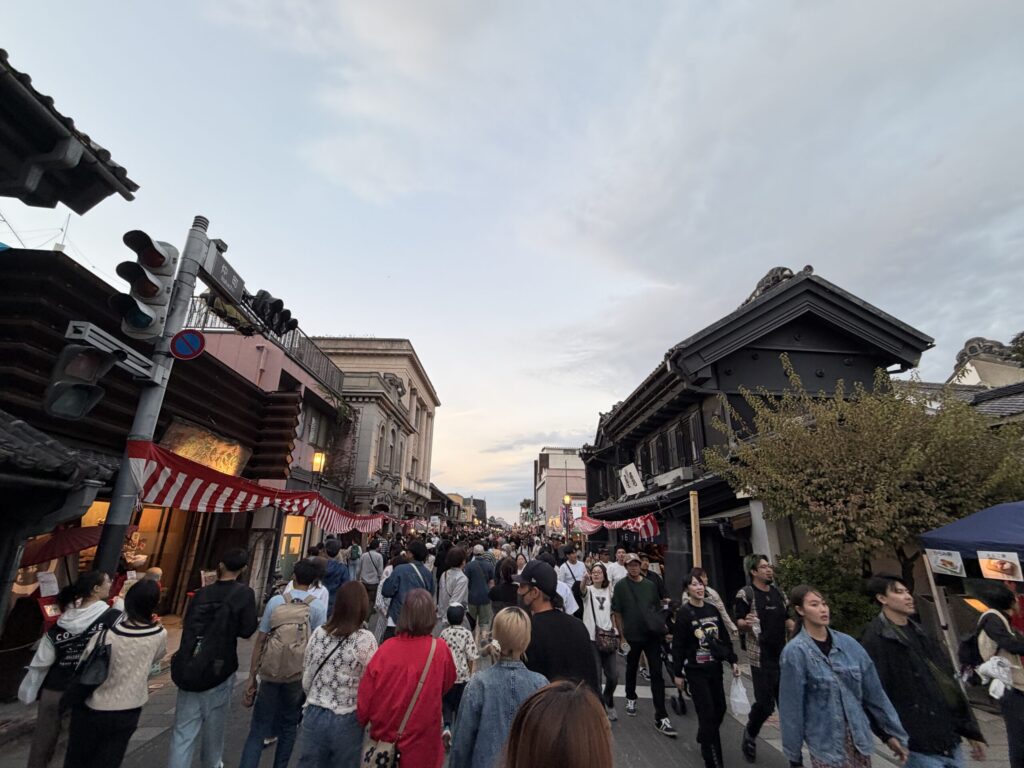
The nickname refers to the city’s connection with Edo, the former name of Tokyo—not to Kawagoe being a miniature version of modern Tokyo. During the Edo period (1603–1868), Kawagoe was an important castle town and trading centre, closely tied to Edo. Its traditional storehouses, or kurazukuri, old streets, and other historic landmarks still evoke that era. This architectural heritage is part of a nationally designated historic preservation area in Japan.
Regional pride is alive and well across Japan. Ask a local about Kawagoe, and you’ll likely hear what sets it apart from Tokyo: its heritage, local food, affordability, and festivals. Kawagoe feels calmer and more welcoming, especially when you’re strolling along its old streets.
Many of the city’s traditional buildings survived thanks to the sturdy kurazukuri storehouses built by Kawagoe’s merchants. With thick, clay-plastered walls and fire-resistant features, they were designed to protect valuable goods from fires. Kawagoe also escaped some of the large-scale destruction that affected other Japanese cities targeted during the Second World War. In the years that followed, residents and local authorities worked to preserve its historic streets. The old town, then, reflects both durable construction and a deliberate commitment to conservation.
Kawagoe is well worth visiting for its striking architecture—and for its remarkable variety of local food. And then there’s Koedo beer: one of my favourite breweries in Japan, with a delicious range of beers brewed locally using local ingredients.
A festival with a powerful sense of community
Held every year on the third weekend of October, on Saturday and Sunday, the Kawagoe Festival draws more than 600,000 visitors. It is recognized as UNESCO Intangible Cultural Heritage. More specifically, it forms part of the collective UNESCO designation “Yama, Hoko, Yatai, float festivals in Japan,” which brings together 33 traditional festivals from across the country. These festivals are celebrated for their elaborate, decorated floats and for the deep cultural connections they sustain between local communities and their histories.
I was fortunate to be invited by Yuri Suzuki, founder of Okatazuke Salon, to join her family for this year’s festivities. Her husband is a community leader who plays a key role in organizing and moving their dashi—the festival floats.
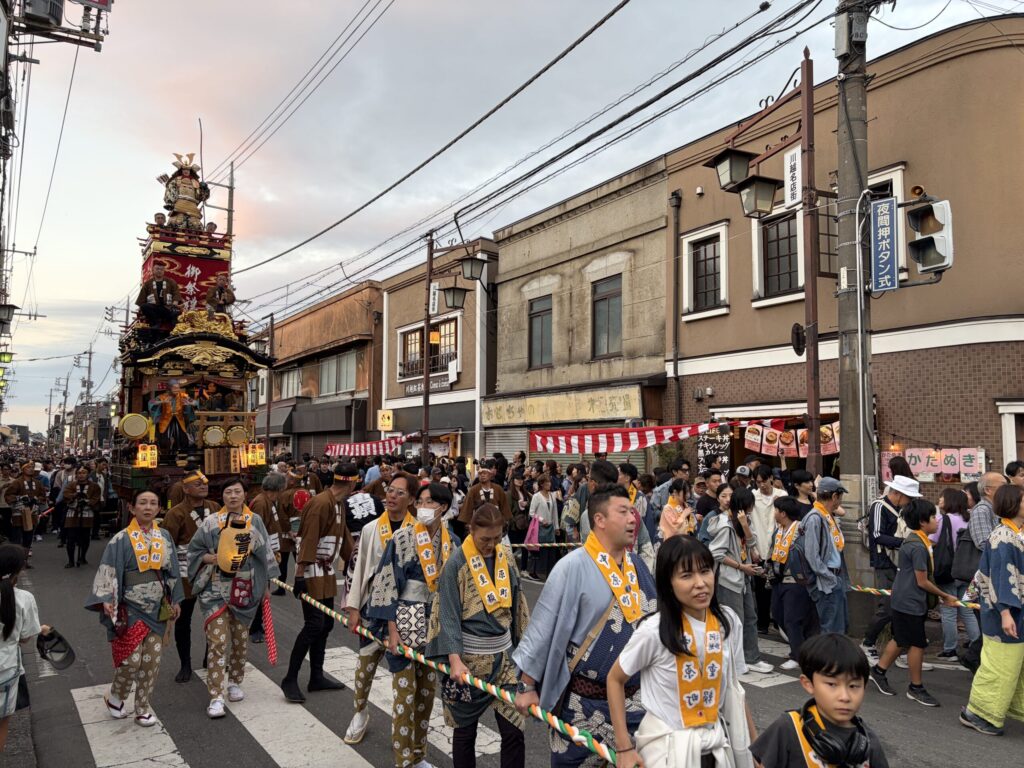
Each dashi belongs to a particular neighbourhood, or chōnai. As it travels through the city, it becomes a vivid expression of that community’s presence and pride. Its progress through the streets asserts the identity and status of the neighbourhood that cares for it. Building, maintaining, and maneuvering these heavy, multi-storey structures—around 3 tonnes and 8 metres tall—takes enormous collective strength and dedication.
The dashi are the spectacular centrepiece of the festival, embodying Kawagoe’s vibrant history and its cultural ties to the Edo period. About 29 floats represent the city’s neighbourhoods and communities, serving as a source of immense civic pride—and a focus for community organization.
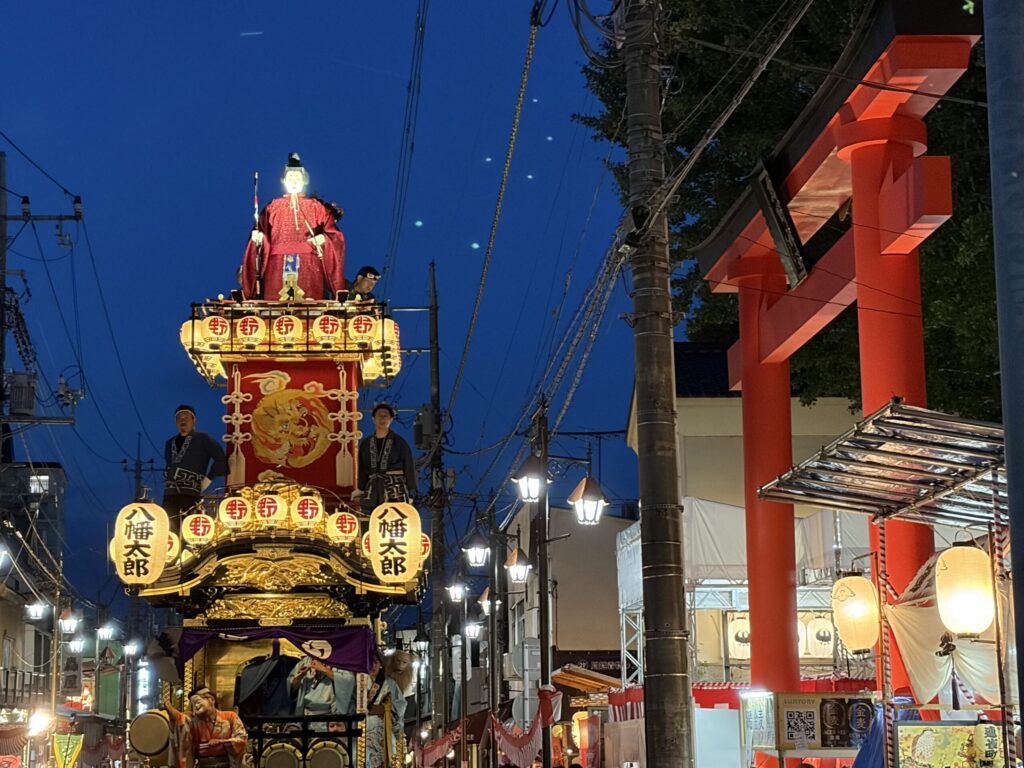
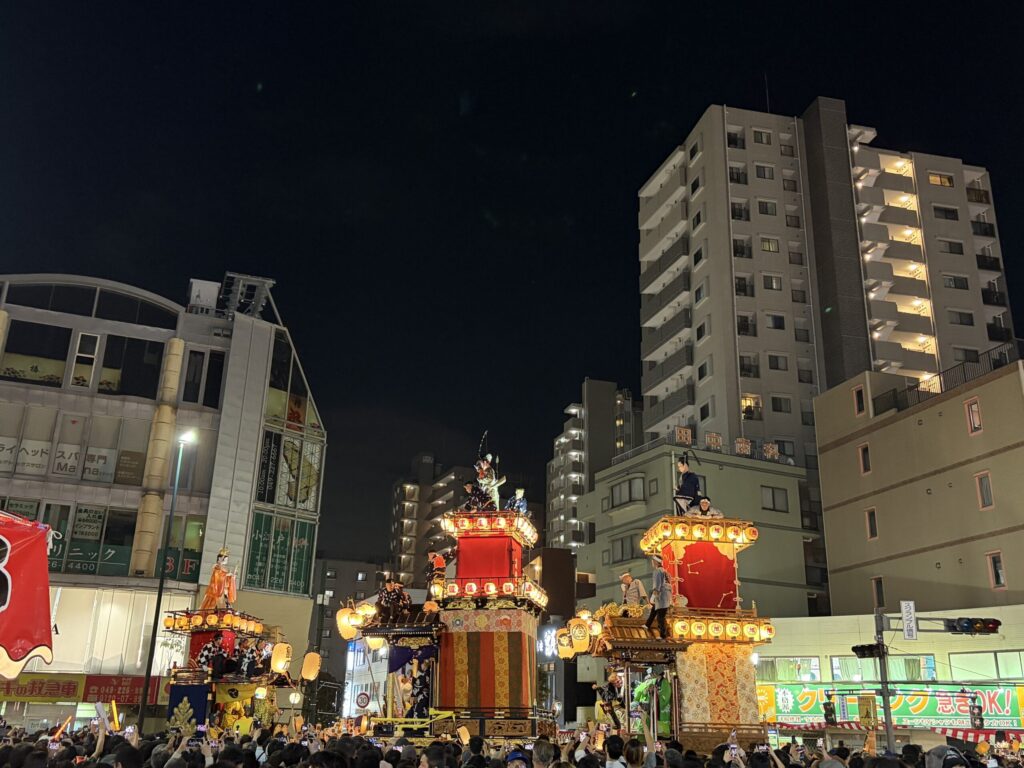
Over time, the dashi became symbols of Kawagoe’s prosperity and merchant power. These imposing, two-storey wooden structures are often adorned with intricate carvings, gold leaf, and elaborate tapestries. Atop each float stands a large doll, or ningyo, portraying a legendary hero, mythological figure, or historical character. The figure is central to the float’s identity and to the pride its community takes in it.
These are far more than static displays. The dashi are living expressions of cooperation, craftsmanship, and the preservation of Edo-period aesthetics. Moving them through the historic town’s narrow streets takes a tremendous, carefully coordinated effort.
Suzuki-san was instrumental in directing his community’s dashi with extraordinary care—watching out for well-wishers’ toes and making sure the long, colourful pulling ropes never touched the ground. The dashi are not simply parade floats; during the festival, they are considered temporary abodes for the kami, or deities. Because they are sacred objects associated with Hikawa Shrine, everything directly connected to them, including the pulling ropes, is treated with reverence.
In Shinto, the concept of kegare—impurity or pollution—is significant. The ground is often regarded as a mundane or potentially polluted space. Keeping objects used in religious rituals, especially those that connect the human and divine realms, from touching the ground helps preserve their ritual purity and sacred status.
The festival’s climax is the hikkawase. At intersections, floats from different neighbourhoods meet and face one another in musical “jams,” with drums, flutes, and dancers—and the powerful energy of the communities behind them.
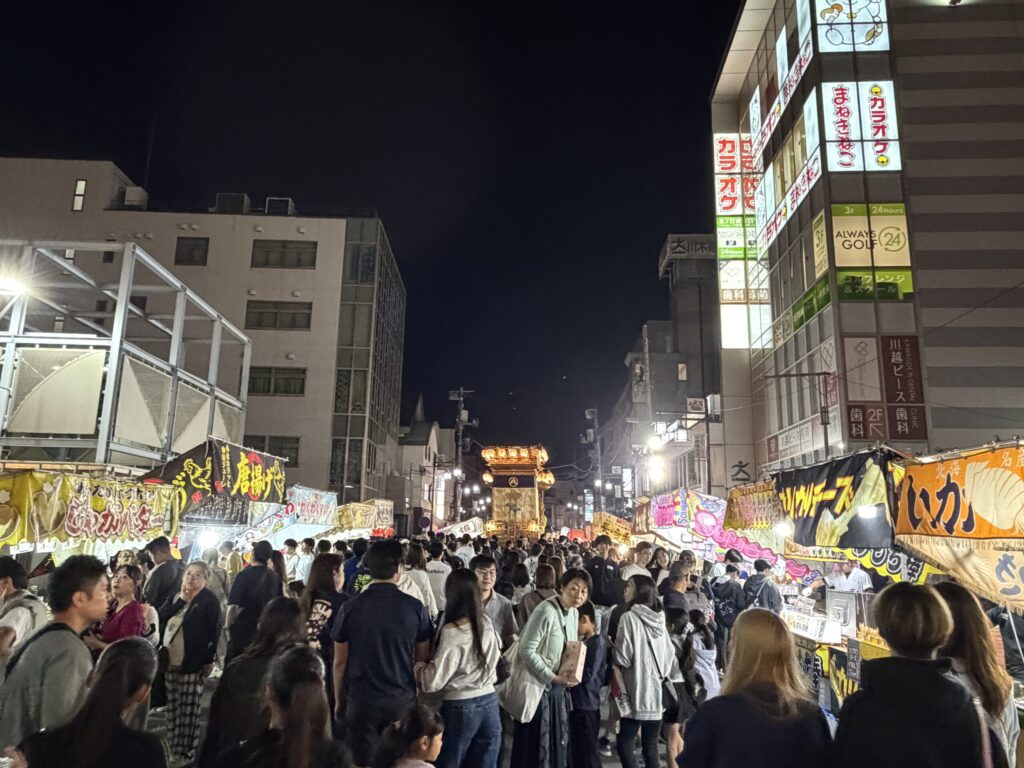
Throughout the festival, Kawagoe’s streets feel vibrant and wonderfully communal. Food stalls and local shops serve festival snacks and drinks, while the scent of grilled food mingles with the rhythms of drums and flutes and the sound of chanting. Crowds gather along the route to watch the dashi pass and cheer on the people pulling them. Residents and visitors encourage the float teams, greet friends and neighbours, and celebrate side by side. The well-wishers bring a warm, supportive spirit to every street.
Witnessing the Kawagoe Festival from so close was breathtaking. I felt honoured to briefly join in pulling the Suzuki family’s community dashi. The chant “Sōre!”, sung in unison to encourage the pullers, rang in my head all the way home.
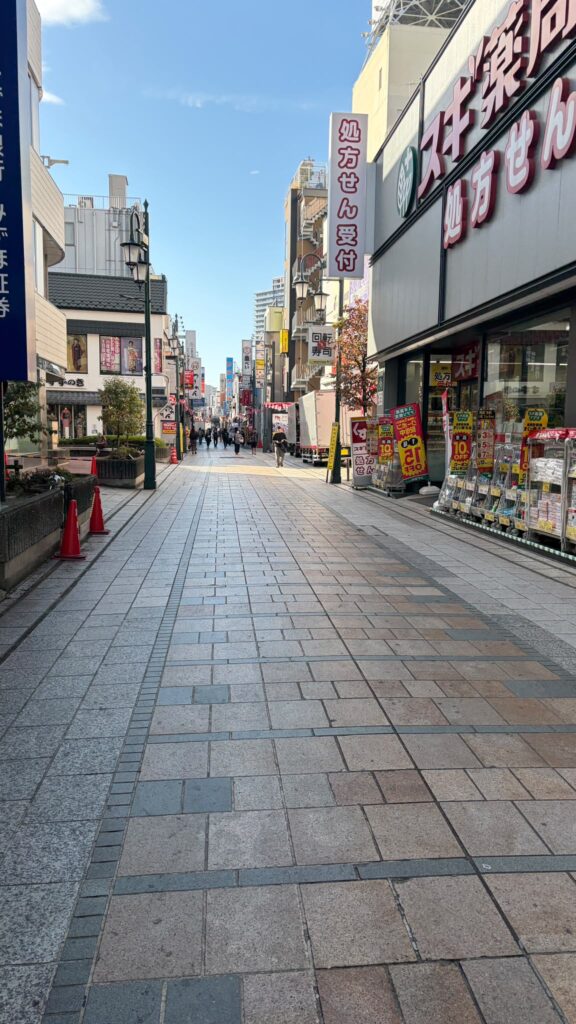
And, not surprisingly—this is Japan, after all—the following day the streets were immaculately clean, with no trace or unwanted reminder of the weekend’s festivities. All the dashi were tucked away in their multi-storey garages, waiting until next year, when they’ll be unleashed again to the delight of the crowds.