Living in Japan can be exciting, but for people who have moved here from another country, Japanese homes can sometimes feel quite different from what they are used to.
Rooms may be more compact, storage space may be limited, and the layout of a Japanese apartment may require a different approach to organizing.
As a professional organizer in Japan, my work is not simply about helping clients get rid of things or finding places to store them.
I think about how each person actually lives and help create practical systems that work for their lifestyle. This may include decluttering and organizing, as well as recommending storage products, furniture, or a completely different way to use the available space.
One of the most rewarding parts of my work is watching the whole home gradually become easier and more comfortable to live in.
This client once told me:
“I can’t make any progress when I try to do it alone.”
But after we started organizing together, something began to change.
Now, after each session, she tells me:
“I’ll try to work on some more before you come next time!”
When one space becomes organized, it often gives us the motivation to work on the next one.
Little by little, each room begins to feel different.
And sometimes, the change is not only in the home. I can see a change in the client’s motivation and mindset, too.
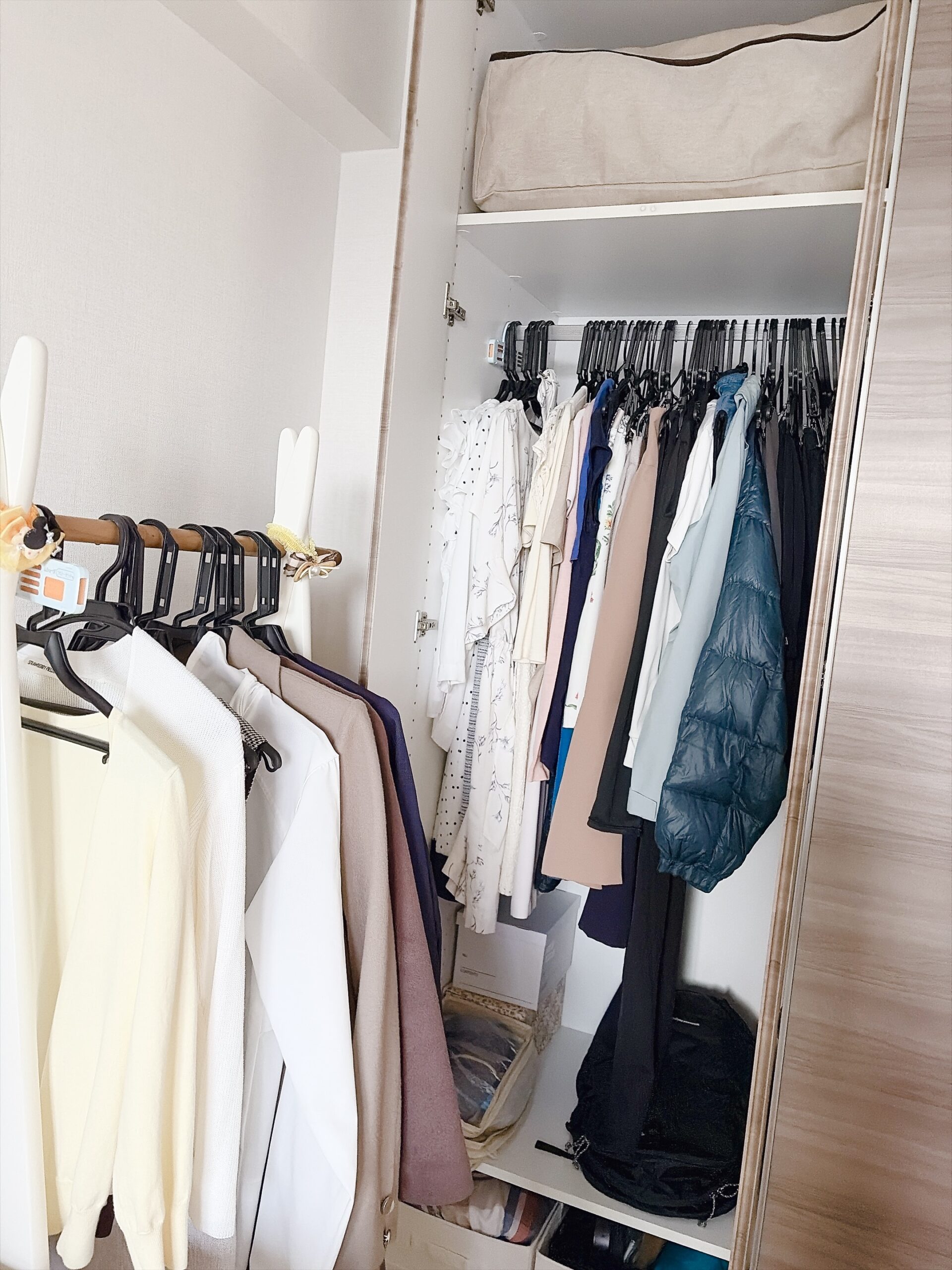
This time, I worked with my Taiwanese client on one of the biggest projects in her home: her closets.
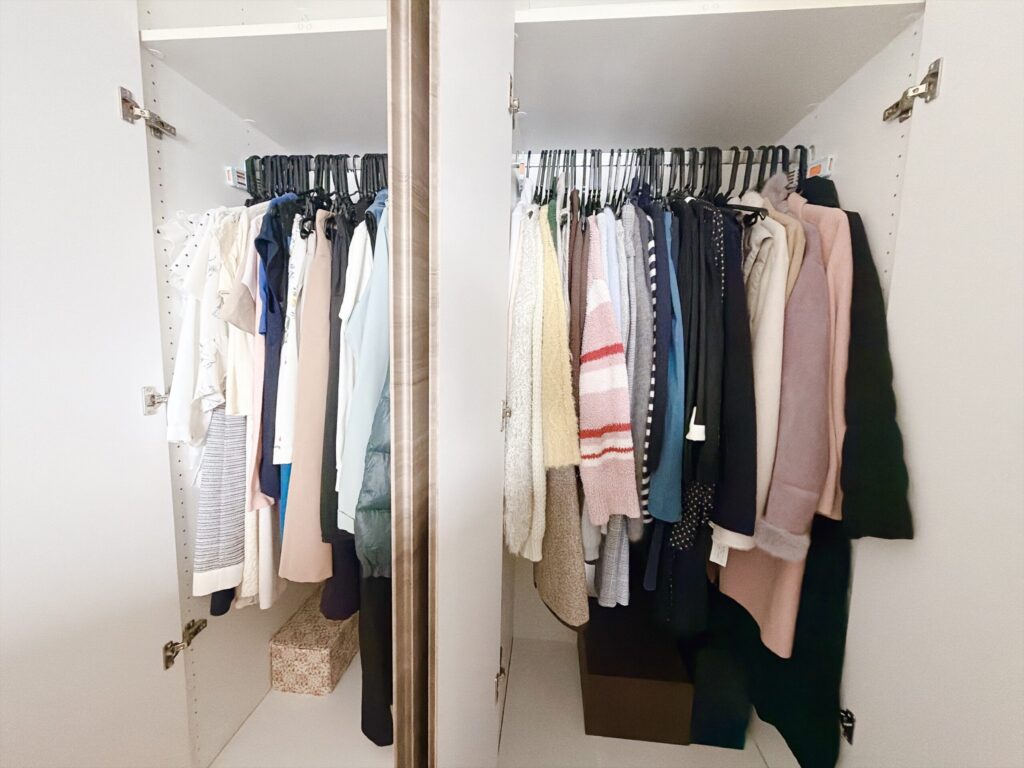
100+ Clothes Decluttered: From Three Closets to One
My client lives in a three-bedroom apartment in Japan, with a closet in each bedroom.
Until now, her clothes had been stored across all three closets.
Altogether, she probably had around 150–200 pieces of clothing.
Our goal was clear:
Bring all of her clothes together into the largest closet in the main bedroom.
By doing this, we could free up the closets in the other rooms and begin transforming those rooms into comfortable guest spaces.
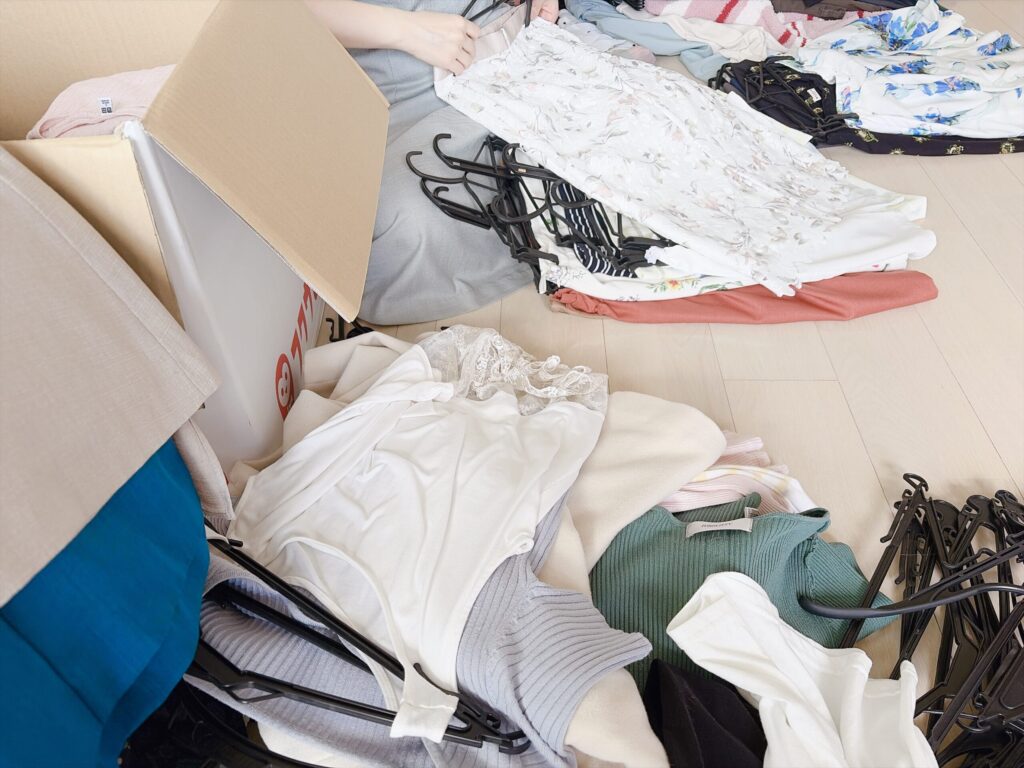
Just Because There Is a Closet Doesn’t Mean You Have to Fill It
When there is a closet in every room, it is very easy to think:
“There’s space here, so I’ll put some clothes here.”
But when clothes are spread across several rooms, it becomes harder to remember what you own.
“Where did I put that top?”
“I think I already have something similar…”
When we cannot easily see or remember what we have, we may end up buying something similar again.
I used to do this myself.
Instead of thinking,
“There is storage space here, so what can I put in it?”
I prefer to ask:
“Where should these things live so that they are easiest for me to manage?”
That small change in thinking can completely change the way we use storage.
Start With How Much the Closet Can Actually Hold
The main bedroom closet has two hanging sections, each approximately 65 cm wide.
Using roughly 1 cm of hanging space per hanger as a simple guide, the theoretical maximum would be:
65 pieces × 2 sections = approximately 130 pieces.
But filling a closet to its absolute maximum does not make it easy to use.
If the clothes are packed too tightly together, it becomes difficult to slide your hand between them, see what you own, or take something out comfortably.
So instead, we aimed for approximately:
50–60 pieces for spring and summer
50–60 pieces for autumn and winter
This includes not only everyday clothing, but also sportswear for her hobbies and occasion wear for parties and special events.
Rather than deciding only:
“I like this, so I’ll keep it.”
or
“I haven’t worn this recently, so I’ll get rid of it.”
we also considered another important question:
How many clothes can this closet comfortably hold while still being easy to manage?
We used the actual capacity of the closet as a guide and selected each piece carefully.
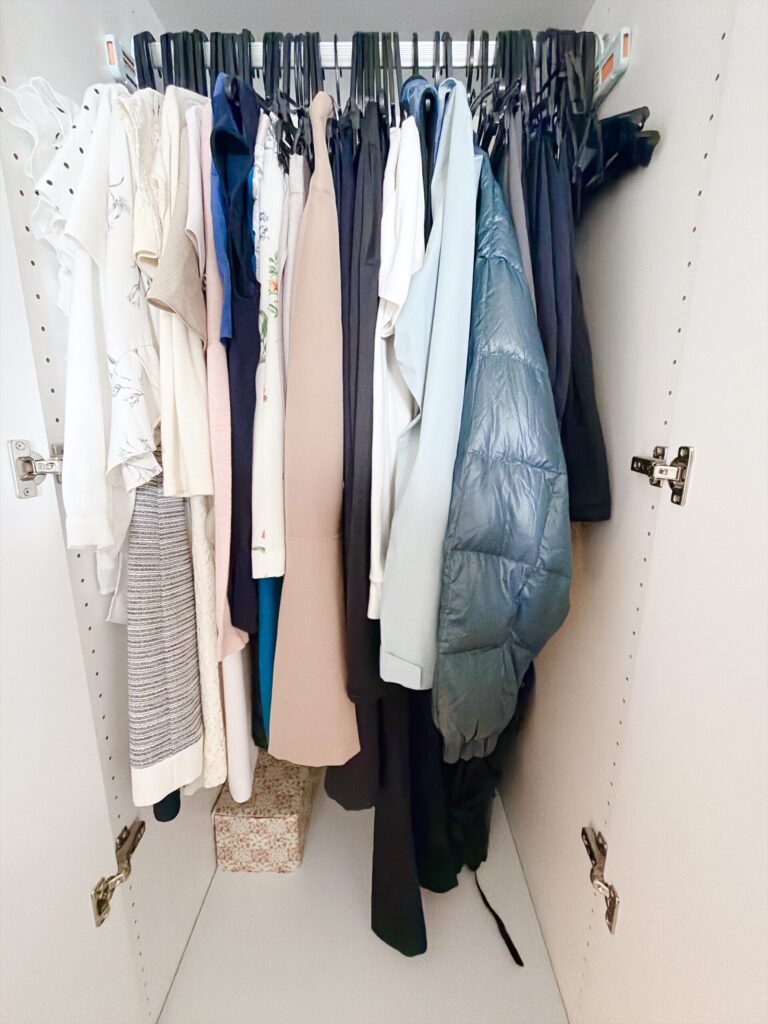
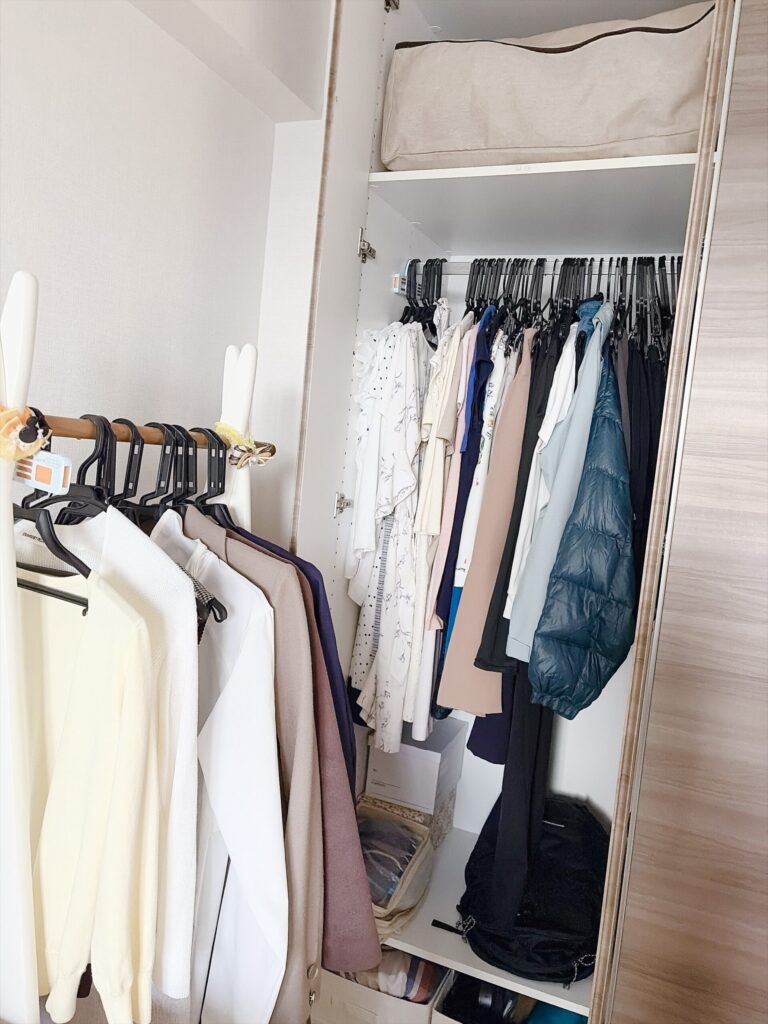
One Closet Where Everything Has a Place
We also organized much more than clothing.
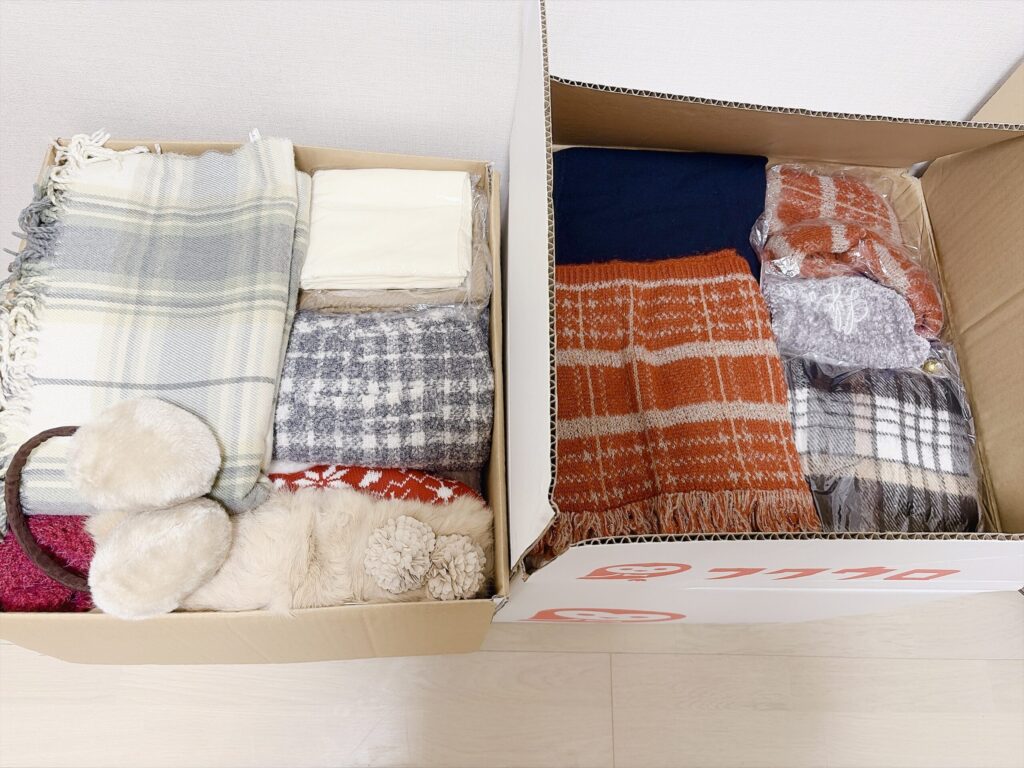
Designer bags, scarves, hats, stoles and travel items were sorted into their own categories and given specific places.
Her designer bags now have a dedicated area where they can be carefully stored in their boxes.
We also created a box for items she plans to take back to her mother in Taiwan.
There is even a temporary hanging space for clothing that has been worn once but is not yet ready for the laundry.
The goal was to create a closet where she can think:
“If I look here, I know where everything I need to get ready is.”
When she saw the finished closet, she was delighted with how clear and easy it was to understand.
More Than 100 Pieces of Clothing Decluttered
During this session alone, my client was able to let go of more than 100 pieces of clothing.
That was approximately three cardboard boxes full.
Many of my clients tell me:
“I know I need to organize, but when I’m alone, I just can’t get started.”
This is why organizing together can make such a difference.
Instead of simply asking, “Do you want this or not?”, we think about the bigger picture:
“What kind of home do you want?”
“How do you want to use this room?”
“What do you need to keep in order to make that possible?”
Once the goal becomes clear, making decisions about individual belongings often becomes much easier.
And this time, all of that decluttering led to something much bigger.
One of the closets that had previously been filled with clothing is now free for a completely different purpose.
It can now store suitcases and bedding for guests.
By changing the role of the closet, we are also freeing up one of the rooms to become the comfortable guest room my client wanted.
The goal was never simply to own fewer clothes.
The goal was to make space for the life she wants to live.
Decluttering more than 100 pieces of clothing was a big step toward making that happen.
Next time, we will continue organizing the remaining two rooms.
Little by little, the entire home is becoming closer to the way she wants to live.
Organize Around Your Life, Not Just Your Storage
While working together, my client told me that home organizing and storage have also become increasingly popular in Taiwan.
As we talked about clothing, personal preferences and what we choose to keep, I also noticed many similarities with the conversations I have with my Japanese clients.
Even when our countries and cultures are different, many of us share the same wishes:
“I want to take good care of the things I love.”
“I want to own an amount that I can comfortably manage.”
“I want my home to be easier and more enjoyable to live in.”
At OKATAZUKE SALON, I don’t simply try to fit belongings into whatever storage space happens to be available.
I look at the flow of the home, the client’s daily routines, their goals, and how they want each room to function.
Then we create an organizing and storage plan around those needs.
Instead of organizing your life around your storage, organize your storage around your life.
That simple shift can completely change how you use your home.
You Don’t Have to Change Your Lifestyle to Fit a Japanese Home
If you are an international resident living in Japan, you may have experienced some of these challenges:
“The rooms are smaller than I expected.”
“There isn’t enough storage.”
“My belongings don’t fit the way I thought they would.”
But living in a Japanese home does not mean you have to force your entire lifestyle to fit the original layout of the house.
What matters to me is finding a balance between the characteristics of Japanese housing and the lifestyle of the person who lives there.
People from different countries and cultures may own different things, cook differently, dress differently, and use their homes differently.
That is exactly why I want to find an organizing solution that works for each individual client.
This client’s home is gradually becoming a space that truly works for her.
One area becomes organized, and then she feels ready to tackle the next.
Watching both the home and the person living in it gradually change is one of my favorite parts of this work.
Home Organizing Services for International Residents in Japan
OKATAZUKE SALON provides home decluttering and organizing services for international residents in Tokyo and Saitama.
From decluttering and closet organization to storage planning, furniture and storage product recommendations, I help clients create comfortable, practical homes that work with both their lifestyle and the unique characteristics of Japanese housing.